
Take your environmental expertise further through graduate study at Buffalo State's Great Lakes Center. Choose a thesis-based M.A. or internship-based M.S. and explore the physical, chemical, biological, and social forces shaping Great Lakes ecosystems. Graduates are prepared with the knowledge and practical experience to tackle environmental challenges across the Great Lakes and surrounding watersheds.
Degrees Offered
Great Lakes Environmental Science, M.A.: Graduates are trained to effectively address a broad range of problems and issues related to ecosystem structure and function in the Great Lakes and surrounding watersheds, preparing them for advanced research, professional employment, or Ph.D. study. This is a research-based degree that culminates in an original research thesis.
Great Lakes Environmental Science, M.S.: Combines environmental science coursework with communication and project management classes and an internship experience. The M.S. program meets the needs of industry, consulting firms, nongovernmental organizations (NGOs), and governmental agencies, preparing graduates for leadership roles as they address a wide range of resource management issues in the Great Lakes and surrounding watersheds. This is a non-research degree that culminates in an internship experience.
Great Lakes Environmental Science, M.S. 4+1: Offers qualified students an expedited, cost-effective opportunity to pursue the degree. The pathway begins with graduate-level coursework at the undergraduate level, giving students seamless entry into the master’s program and an accelerated path to an advanced degree.
Where Our Students Learn
The Great Lakes Center
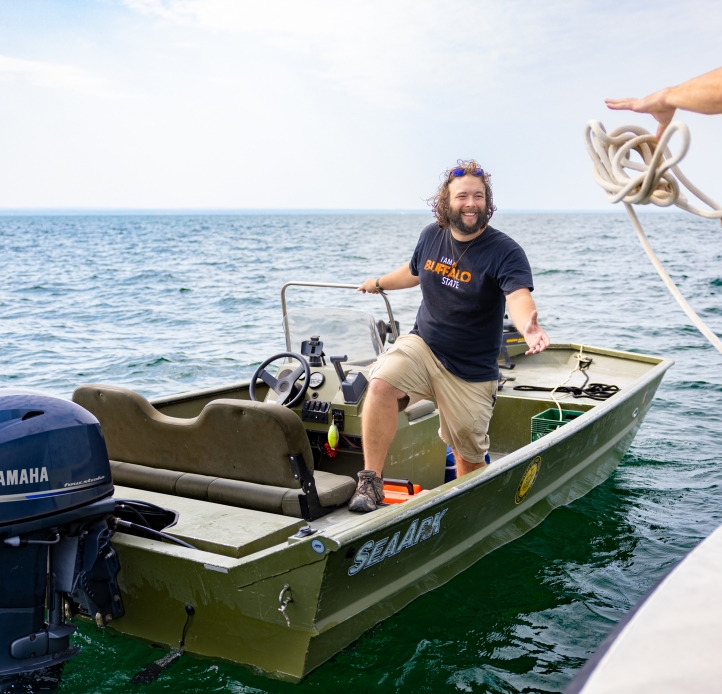
Located four miles south of Buffalo State's main campus, the Great Lakes Center's field station, fleet, and field equipment provide access to Lake Erie, the Buffalo River, and the Niagara River. This is a prime site for students who wish to study how humans both create and resolve ecosystem-scale problems, especially those related to freshwater systems.
Community Engagement
Help shape the future of the Great Lakes
Great Lakes Environmental Science students work alongside researchers, resource managers, community organizations, and environmental professionals to address real-world challenges facing the Great Lakes and surrounding watersheds.
Our interns work on projects ranging from studying invasive species to designing a restoration project, contributing to watershed management, and studying macroinvertebrates in the Great Lakes watershed.
Gain experience applying science in the field, working with partners, and communicating what you learn to the broader community.
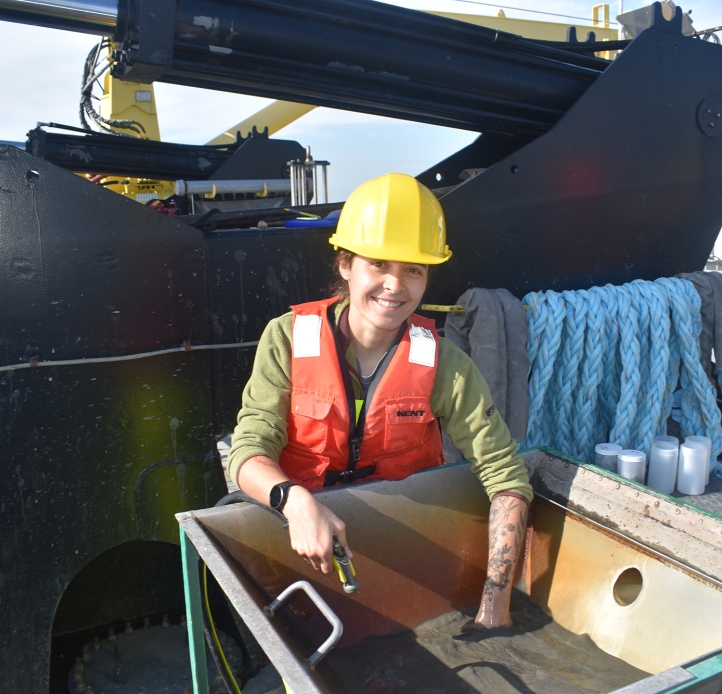
GLES M.A.: Graduates are prepared for advanced research, professional employment, or study at the Ph.D. level.
GLES M.S.: Students are prepared for leadership roles in industry, consulting firms, nongovernmental organizations (NGOs), and governmental agencies that deal with the management of resources within the Great Lakes and surrounding watershed.
Environmental scientists work in applied fields and interdisciplinary settings, analyzing the effects humans have on the environment and the plants and animals that inhabit it. From agriculture to healthcare to industry, environmental scientists teach, research, and work in business to help humans understand our work.
GLES M.A. Thesis Research
Round goby effects on stream drift
The role of dominance hierarchies in invasive crayfish success
Lake effect climate pattern influences on forest composition
The hydrodynamic constraints on emerald shiner in the Niagara River system
The dominance of non-native taxa in Lake sturgeon diets of the lower Niagara river
GLES M.S. Internships
Stormwater mapping for Town of Tonawanda Public Works
Coastal resiliency assessment for Erie County Planning Department
Invasive species management projects with Western NY PRISM
Habitat restoration with the Eaton Preserve Habitat Restoration Project
Great Lakes-wide sampling aboard the EPA vessel, R/V Lake Guardian, for monitoring with the GLC Benthic Biomonitoring Project